My daughter had a positive COVID screening test just after I sent last month's letter. Subsequently all three of us tested positive, got sick and isolated together.
Coronavirus is known to cause respiratory disease, but it also has significant effects on other tissues particularly blood vessels and the brain. From personal experience, I've noticed it hits people in their vulnerable places.
For me that was my sinuses and lymph nodes, for my daughter it was her gut. For many it is their lungs and/or blood vessels, which even in mild cases can leave a lingering cough, tiredness and shortness of breath.
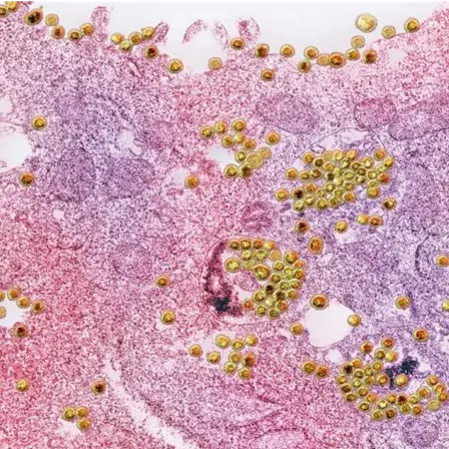
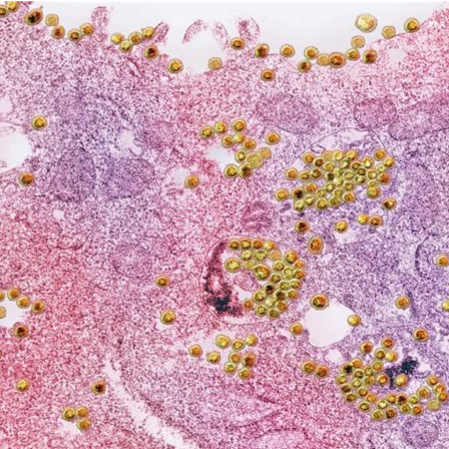
I can’t stop staring at this image of coronavirus! There is something beautiful and terrifying about it.
Osteopathy can support your body's recovery from any illness, so please let me know if you need help. I am working again now, if a little slower than usual.
There is a gap between the understanding of long COVID and the needs of people experiencing symptoms. This is really debilitating for the whole community, and an important topic to continue to enquire about.
I'd love to increase our collective knowledge so we can better support all our healing and recovery. What are your experiences and observations of COVID and its long term effects?
Convalescence
Convalescence is allowing time to gradually return to health and strength after illness. I feel this is essential to long term recovery and also a bit of a lost art.
Since the start of the pandemic, we are much better at taking time to isolate and rest during an acute infection. But are we allowing enough time to fully convalesce? Is it even financially and practically possible for most people?
I've outlined below how I've supported our convalescence so far. Maybe it will help you approach your next recovery gradually and gently...
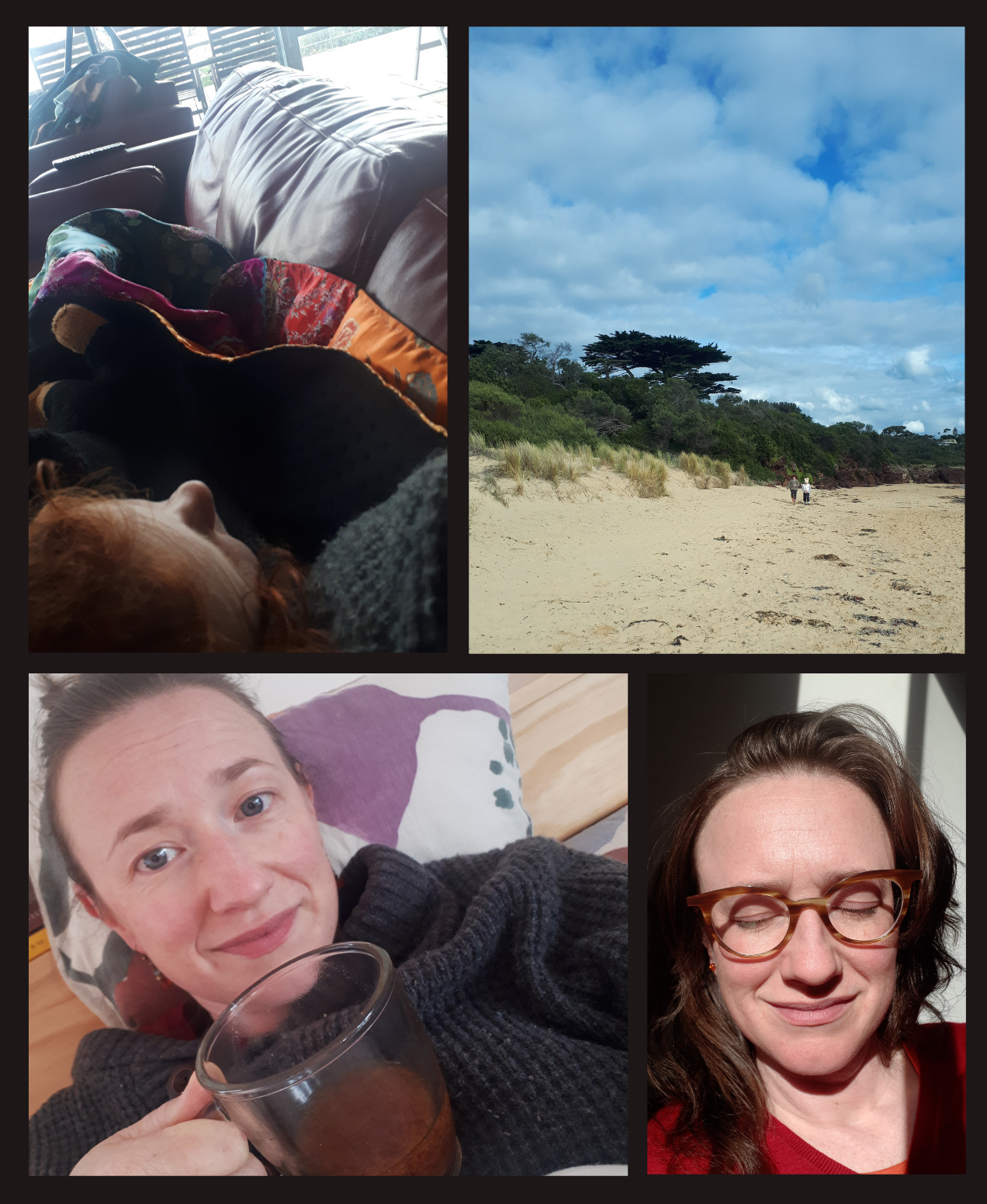
Week 1
- Lots of rest and hydration with soups, broths, herbal teas and citrus juices
- Hugs and laughs together
- Soaking in sunlight whenever possible
- Calling on friends and family for essential items and emotional support
Week 2
- Slow walks outside
- Half days at school and work
- Early to bed every night, naps if needed
- Long weekends when possible
- Listening to our bodies and stopping to rest if symptoms increase
- Leaning in to the frustration of being weaker than normal and not getting much done
Week 3
- Managing flare ups of symptoms with the same steps as week 1
- Cancelling any extra social, emotional or mental tasks that can wait, to allow more space and time for rest
- Building up to some longer walks and gentle exercise
- Finding joy in slowness, connection and nature
- Accepting where we are at in our healing process without forcing it to go faster
Week 4
- Embracing our vulnerability - getting sick and needing time to get better is part of being human
- Supporting family, friends and colleagues to convalesce
- Normalising the ups and downs and gradual nature of recovery from illness
I'm learning that this approach to convalescing can be applied to any vulnerable process in our lives - the times we feel flawed, weak, too slow, like a failure, or like something is wrong with us.
It takes courage to keep tending and feel your way through this rather than push, resist or wish a way out. Have courage,
Emily


